
Resolution Guilt: What to do when motivation runs out

It’s been a little over a month since 2026 arrived. What began as a year filled with life‑changing resolutions, long lists of new hobbies, and ambitious behaviour changes has slowly turned into a growing sense of guilt for not following through.
You tell yourself that tomorrow will be different; that you’ll finally commit. But the guilt of not following through keeps building. You push yourself mentally and physically, hoping to force motivation back into your life, only to realize that spark you started the year with just isn’t there anymore. And so the cycle continues: guilt, inaction, more guilt.
But contrary to what movies and fiction often suggest, real growth doesn’t happen through pressure or punishment. It happens in safe, gentle environments. So let’s unpack why sticking to resolutions is so hard and explore some practical, compassionate ways to find your rhythm for the rest of the year.
ARE YOUR GOALS REALLY YOURS?
According to a 2023 Forbes Health survey, 67% of respondents felt they “had to” set radical New Year’s resolutions. Seeing friends travel to Japan, run marathons, or pick up niche hobbies like clay moulding, many felt pressured to do the same in order to reinvent themselves. But when the goals we set don’t align with our personalities, learning styles, or actual lifestyles, the gap between wanting change and knowing how to change becomes overwhelming. Faced with that gap, most people avoid the goal altogether.
Social media only adds to this pressure. Influencers often present perfectly curated routines that simply don’t translate into the daily life of someone balancing a full‑time job, school, family responsibilities, or a completely different financial reality. This mismatch between who we are and the goals we try to adopt naturally leads to stress, burnout, and a lack of follow‑through.
Another major reason people fall off their resolutions is the expectation of overnight transformation. Real change is delicate! It starts with small, consistent actions that compound over months. Each time you choose differently, you gently rewire your brain and teach it a new pattern. But this process requires patience and compassion. When we try to overhaul our entire lives at once, we’re fighting years of mental conditioning. The brain, wired for self‑preservation, resists sudden change, and that resistance often shows up as freezing, avoidance, or exhaustion.

Now that we understand why New Year’s resolutions often fall apart, let’s look at some practical, gentle ways to approach change for the rest of the year.
PLAN FOR SUCCESS, BUT BE READY TO PIVOT
The most important thing to remember when planning for change is to be compassionate with yourself. Self‑kindness is one of the most powerful tools you have. Here are two practical ways to put that into action:
When setting goals, the SMART framework helps you break things down into steps that actually fit your values, lifestyle, and learning style. It reduces friction and makes the process feel manageable.
S = Specific: Clearly define what you want to achieve. Ask yourself why this goal matters and what success would look like for you.
M = Measurable: Create simple ways to track progress such as a notes app habit tracker or a notebook that works perfectly.
A = Attainable: Choose goals that are realistic for your current season of life. You can do many things, just not all at once.
R = Relevant: Make sure the goal connects to your bigger picture. For example, writing one paragraph a week becomes 52 paragraphs a year; a strong foundation for improving your academic writing.
T = Time‑Bound: Set a timeline with small milestones. Each milestone brings you one step closer to the finish line.
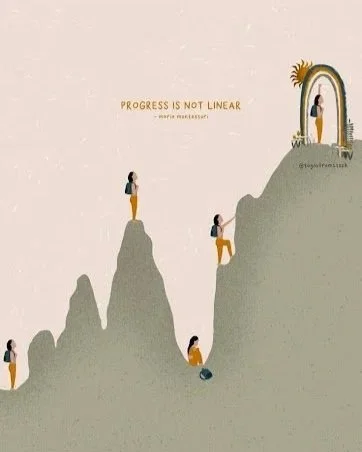
CRITICAL REFLECTION IS YOUR FRIEND
You’ve been following your SMART goals, staying more consistent, and even giving yourself grace on the days you fall off and making real progress. But are we done? Not quite. One of the most overlooked parts of keeping New Year’s resolutions is critical reflection.
Critical reflection means looking back at your experiences and noticing what has shifted since you started a new habit or routine. It’s the skill of adjusting your plan based on what’s actually working, not what you hoped would work. This ability to reflect and refine is what separates “good intentions” from meaningful growth.
Set aside time each month to check in with yourself:
Which steps felt natural and easy? Treat those as your compass and keep following them.
Which steps felt heavy or difficult? Revisit the SMART framework, reconnect with your core values, and tweak the plan.
So my dear friends, I’ll leave you with this one reminder: while it’s important to set goals and strive for growth, you are still worthy of love even on the days you don’t hit every step. Your life is not an endless self‑improvement project. You are a human being, not a checklist and it is more than okay to let go!