
Finding Your Christmas Music
Christmas music might be annoying or overplayed to some, but it highlights the emotional power of art
As the holidays approach, there is one thing we can all agree on: Mariah Carey’s All I Want for Christmas Is You is amazing! Or is it?
We all know that one person who dislikes, or downright hates, Christmas music. Maybe it’s even you! For some, the genre is associated with long retail shifts spent listening to the same wintery tunes endlessly looping from overhead speakers. It’s easy to see why some prefer a ‘Silent Night’ during December.
In my life, Christmas music has played a much more magical role as the soundtrack to memories of joyful traditions during the holiday season. When I listen to Ella Fitzgerald’s jazzy rendition of Sleigh Ride, I think of wrapping presents for friends. Bing Crosby’s commanding voice singing Do You Hear What I Hear? is tied to baking butter tarts and chocolate bark with my family. Good King Wenecelas by the Irish Rovers accompanies memories of driving around my hometown looking at my neighbour’s Christmas lights.
This year, I’ve been reflecting on why Christmas music is so tied to how I celebrate the holiday. Through exploring it, I’ve come to realize that in an uncertain world, finding the music that makes us feel more in tune with the things and people that we love is one of the best ways to remind ourselves of who we are.
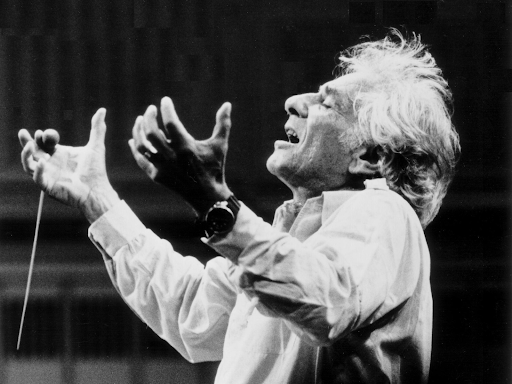
In his 1972 lecture, The Unanswered Question, composer Leonard Bernstein stated that “music can name the unnameable and communicate the unknowable.”
What does he mean by this? The answer lies in his 1963 rendition of Carol of the Bells, with the New York Philharmonic Orchestra. The piece’s dynamic range and varying orchestration stir one’s emotions — there is a sense of mystery and intrigue that cannot be accurately pinpointed with words.
A similar effect is also found in more modern Christmas music. Jeff Meegan, David Tobin, and Mark Armstrong’s The Very Best Day This Year was only released four years ago, but for me, it evokes an overwhelming sense of joy and nostalgia that is difficult to capture in writing.
While scientists don’t fully understand how music impacts our brains, songs that are close to our hearts go beyond evoking typical emotional responses. They activate a range of thoughts, feelings, and memories, giving them a powerful effect on our minds. For me, it simply isn’t Christmas without the sound of sweeping orchestral scores reminding me of Christmases past, or upbeat big bands bringing me a sense of excitement and anticipation.
Scholars have noted how the impact of music varies with our own experiences. In her chapter Music, Experience and the Anthropology of Emotion, linguist Ruth Finnegan explains that our experiences of music are molded by the groups we belong to and the contexts we exist in. We can’t expect ourselves to love the music others love, but we can appreciate the meaning it holds for them.
For instance, as a child who grew up watching Home Alone 2: Lost in New York, I love John Williams' choral theme Christmas Star, which plays throughout the film. While it isn’t the most exciting piece, my childhood spent watching the film it features in makes it far more impactful for me than it would be to someone who has only heard it playing in the line for renewing their driver’s license. A piece of music that seems unremarkable to others can stir memories and feelings for us that make it special.

Finnegan also highlights the work of anthropologists who have studied music’s “consciousness-changing potential.” Since music influences what memories we think of and what emotions we experience, it changes how we view ourselves, others, and the events happening around us. A song can help us remember someone who has moved on, or make a hard experience seem a little easier.
During my first final exam period at university last December, Nat King Cole’s The Happiest Christmas Tree was a regular member of my Spotify queue. Featured in his standout album The Christmas Song, the track is certainly silly and could be seen as quite commercial. Despite this, its upbeat tone helped me view a stressful time in a more positive light.

Music that is special to us, such as Christmas music for me, is both shaped by and shaping our views of the world. While the songs, artists, and genres that hold meaning to us vary with our own experiences, these songs also shape how we see our lives. This is an impressive power, but also one that can easily be overlooked.
As communication scholars, we often focus on analyzing how cultural products such as music have been commodified and commercialized. We point to thinkers such as Theodor Adorno and Byung-Chul Han to illuminate how art has become stripped of passion and soul in favour of a mass-produced, widely consumable form.
These critiques are justified and important, as they help shed light on the exploitation and censorship of creativity. However, we must also remember that commodified pieces of art can still hold immense value for people by helping them understand what cannot be said and bringing positive feelings to their lives. Christmas songs can be examples of commercialized art, but they also evoke indescribable feelings of cheer and bring joy during a busy, stressful time as a student. We can enjoy music that is special to us in this way while still acknowledging the negative impacts of commodified culture.
This holiday season, I want to remind you to find your own ‘Christmas music’. Maybe it’s songs like those I’ve shared. Maybe it’s songs for a different winter holiday. Maybe it’s even songs that are as far from the winter holiday vibe as one can get. When the news is negative, the world feels uncertain, or you’re overcoming personal challenges, it’s important to find the artistic works that support you in feeling in tune with the things that matter most to you. This is where the power of art lies. So, go find your ‘Christmas music,’ and enjoy it.
Happy holidays!